Zero-turn mower won't move: Safe diagnostic guide
Quick answer
If a zero-turn mower starts but will not move, shut it down and identify whether both drive sides or only one side failed, whether forward and reverse are affected, and whether the problem began after towing or only when hot. On a cool, parked machine, use the exact model manual to verify the freewheel or bypass controls and inspect only visible linkage, belt, brake, and leak evidence. Stop for unexpected movement, a brake that will not hold, leakage, excessive heat, burning odor, or abnormal noise.
How to triage a zero-turn mower that will not move
Use parked observations to classify a total travel failure without defeating an interlock, raising a running mower, or guessing at hydraulic procedures.
1. Stop and secure the mower
Move clear only if it remains controllable, then follow the manual to park, disengage the PTO, place controls in park or neutral, set the brake, shut down, remove the key, and wait for all motion to stop.
2. Identify the exact machine
Record the full mower model, serial number, power source, drive-unit labels, hours, and current operator manual before interpreting a bypass, belt, fluid, or fault code.
3. Classify the lost travel
Record both sides versus one side, forward versus reverse, cold versus hot, and whether the failure followed towing, transport, service, impact, or a belt event.
4. Inspect only parked, visible evidence
After the machine cools, compare the manual's operating positions for accessible bypass and controls, then note visible disconnected linkage, belt evidence, debris, leakage, damage, heat, or odor without removing guards for a live test.
5. Choose the correct next path
Use the narrower linked guide when the symptom is one-side pull, hot-only fade, belt departure, no-start, or blade engagement. Arrange qualified service for unsafe movement, brake failure, leaks, heat, abnormal noise, or internal work.
Common questions
- Why does my zero-turn mower start but not move?
- Possible causes include a freewheel or bypass control left in the manual-movement position, a parking-brake or control-linkage problem, loss of belt drive on applicable models, an interlock or electronic fault, or a drive-unit problem. Classify both sides versus one side and use the exact model manual before touching a control.
- Why won't my zero-turn mower move after being towed or pushed?
- The manual-movement or bypass controls may not have been returned fully to the operating position, but their number, location, direction, and reset method vary. Park level, shut the machine down, let it cool, and follow the exact manual. Do not copy another model's valve-turn count or tow procedure.
- Can low hydraulic fluid stop a zero-turn mower from moving?
- A leak or incorrect level can affect some serviceable hydrostatic systems, while other units are sealed and electric zero-turns use different drive systems. Do not open a hot reservoir or add a generic fluid. Check only as the mower and transmission manuals specify, and service the cause of any low level or leak.
- Should I purge the transmission when a zero-turn will not move?
- Not from a generic online procedure. Some manufacturer procedures require running the machine with drive wheels raised or use model-specific control sequences, which are outside this parked-inspection guide. Use only the exact manuals and qualified service when safe support, restraint, or procedure details are unavailable.
Source note: Reviewed against current official Husqvarna support, a Husqvarna Z254F operator manual, Toro model-specific operator guidance, Hydro-Gear service information, and John Deere's manual finder. Bypass locations, towing rules, drive layouts, fluids, belt access, brake systems, and service procedures vary by model and serial number.
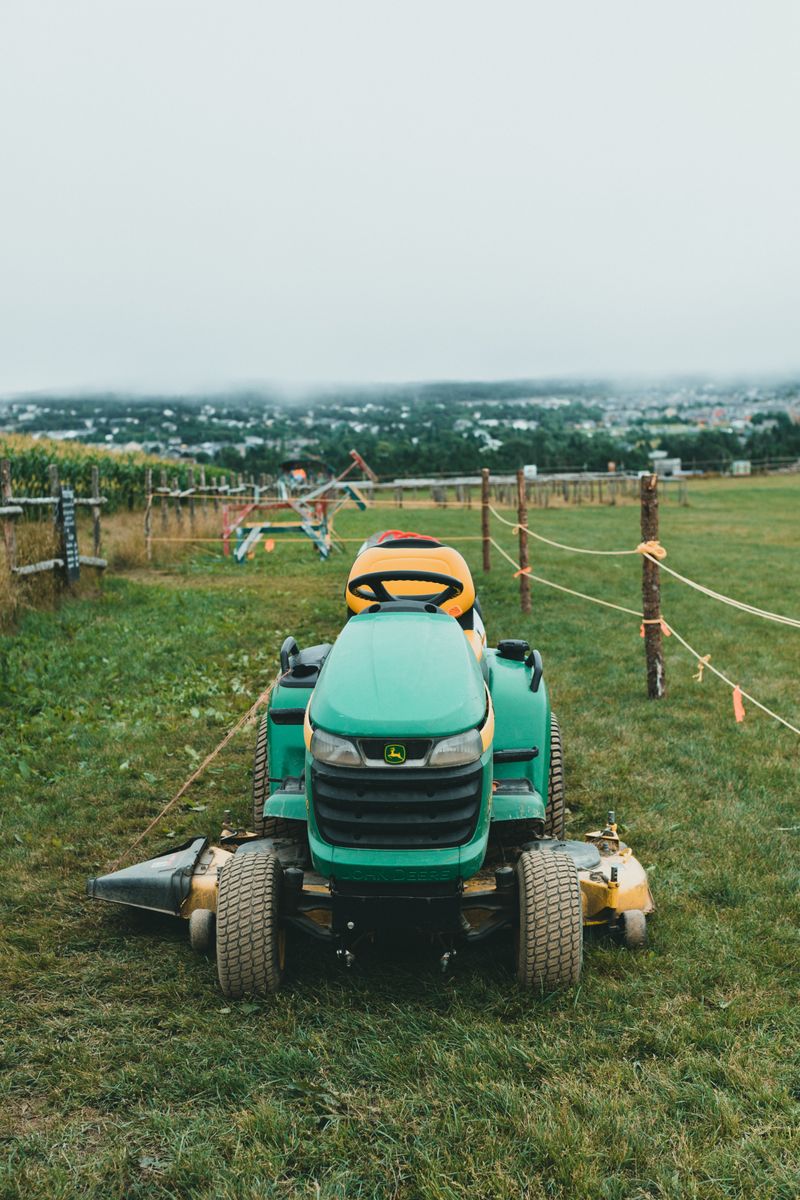
If your zero-turn mower starts but won’t move, do not begin by adding fluid or adjusting a linkage. Shut it down and answer four questions: Did both sides fail or one? Is travel lost in forward, reverse, or both? Did it happen cold or only after warming up? Was the mower recently pushed, towed, transported, or serviced?
When both sides stop working after manual movement, the exact model’s freewheel, tow, or hydrostatic bypass controls are a logical first check. When one side fails, the mower pulls, or travel fades only when hot, a different diagnostic path is more useful. These observations narrow the fault without running a raised machine, defeating an interlock, or guessing at a hydraulic procedure.
Zero-turn mower no-travel diagnosis at a glance
| What the mower does | First parked observation | Best next path |
|---|---|---|
| Both sides will not move after pushing, towing, or transport | Compare every manual-movement or bypass control with the exact operator manual | Correct only by that manual; stop if a control is damaged, hot, inaccessible, or unclear |
| Both sides lost forward and reverse suddenly | Note engine or battery status, brake release, controls, belt evidence, noise, odor, and recent service | Parked external inspection, then dealer diagnosis if no clear manual-defined cause appears |
| One side moves and the other does not | Record the affected side, direction, control feel, leakage, and whether the mower veers | Use the zero-turn one-side diagnostic |
| Travel is normal cold but fades after use | Record minutes, load, ambient conditions, both sides versus one, engine speed, heat, and noise | Use the hot hydrostatic power-loss guide |
| The traction belt came off or will not stay routed | Do not reinstall or tension it by guesswork | Use the zero-turn belt diagnostic |
| The engine will not crank, start, or keep running | Do not treat it as a travel fault | Use the zero-turn no-start guide |
| The mower travels but the blades do not turn | Keep PTO and deck diagnosis separate from propulsion | Use the blade-engagement guide |
Stop before inspecting the drive system
If the mower still responds predictably, move it only far enough to leave slopes, traffic, water, drop-offs, fire hazards, and bystanders. Follow the operator manual to disengage the PTO, place the controls in the specified park or neutral position, set the parking brake, shut down the engine or drive system, remove the key, and wait for moving parts to stop. Let the engine, muffler, motors, and hydraulic components cool.
Do not continue operating a mower that moves unexpectedly or has a brake that will not hold. Keep clear of its travel path and arrange model-appropriate recovery or dealer service. Do not crawl under it, rely on a jack, spin a wheel by hand, or run the mower on supports to “see which side works.”
Never bypass a seat, brake, PTO, control-lever, charger, or operator-presence interlock. Never reach past a guard to touch a belt or spring. Hydraulic fluid can be hot and can penetrate skin under pressure, so do not open a hot reservoir or search for a leak with your hand. Fluid injection requires immediate medical care.
1. Find the exact model and manuals
Record the full mower model, serial number, hours, power source, and any drive-unit identification label you can read without unsafe access. Then obtain the current operator manual and, where available, the manufacturer-approved drive or service information for those identifiers.
This step matters because “zero-turn mower” does not describe one drive layout. Machines may use separate hydrostatic transaxles, pumps and wheel motors, electric drive units, a shared traction belt, model-specific brakes, or electronic fault logic. Even closely related models can use different bypass locations and manual-movement rules.
Do not apply a valve-turn count, tow speed, fluid type, belt route, purge sequence, or fault-code meaning from another mower. For example, official Husqvarna guidance shows that bypass arrangements differ across its Z200, Z400, and Z500 families. That is evidence to check the exact manual—not a universal procedure.
2. Classify both sides versus one side
A failure on both sides directs attention toward something the two drive paths may share: the machine state, parking or control logic, a manual-movement setting, a shared belt on applicable models, or power supplied to the drive system. It does not prove which item failed.
A failure on one side points toward that side’s bypass, brake, linkage, belt path, electrical control, or drive unit. Do not keep driving on one responsive side or hide the symptom with a tracking adjustment. The dedicated one-side pull and weak-drive guide separates a simple straight-line tracking complaint from genuine loss of drive.
Write down whether the lap bars or steering controls feel normal, loose, blocked, or unequal. Note a disconnected rod, missing fastener, bent bracket, or obvious impact damage only from the parked inspection positions allowed by the manual. Do not adjust neutral or control linkage unless the exact service procedure provides safe restraint and a qualified person can complete it.
3. Separate forward, reverse, cold, and hot symptoms
If forward and reverse are both absent, record whether the failure was immediate or followed a specific event. If only one direction is affected, a control or internal drive problem may be involved; avoid forcing the lever or changing linkage length to compensate.
If travel is normal at first and weakens after several minutes, record the warm-up time, slope, load, ambient temperature, deck status, engine speed, affected side, abnormal sound, odor, and whether performance returns after cooling. That symptom belongs in the hydrostatic mower hot power-loss diagnostic, which covers cooling, engine load, belt behavior, external service items, and professional hydraulic testing.
Stop immediately for an overheat warning, burning odor, smoke, a new whine or grinding sound, or visible leakage. Do not open a hot hydraulic system to check the level.
4. Recheck the post-tow or freewheel state by the manual
If the mower stopped driving after it was pushed, transported, or recovered, review exactly what was moved to permit manual travel. A mower may use two release linkages, separate valves, rods, or a different arrangement. Some manufacturers restrict towing or allow only short, slow manual movement. Bypass controls can also be close to hot exhaust components.
With the machine off, cool, and parked on level ground, compare each accessible control with the manual’s operating position. Do not force a stuck control or assume that “in,” “out,” vertical, horizontal, clockwise, or counterclockwise means the same thing across models. Do not start the mower until every manual-movement control is restored exactly as its manual requires.
If the mower cannot be made secure, the parking brake does not hold, or the procedure conflicts with what is on the machine, stop and call the manufacturer, dealer, or qualified equipment-recovery provider. Never improvise a tow point or towing method.
5. Read the visible evidence without live testing
After shutdown and cool-down, use a flashlight only at owner-inspection points permitted by the manual. Record:
- A drive belt that is absent from its visible route, badly frayed, glazed, contaminated, or surrounded by rubber dust
- An accessible linkage that is visibly disconnected, bent, or missing hardware
- A bypass or brake control that does not appear to reach the documented position
- Grass or debris blocking a documented cooling screen or external fan area
- Fresh fluid beneath the mower, wet hoses or cases, or oil-coated debris
- Heat discoloration, a burned smell, impact damage, or a loose guard
- An electronic warning, fault code, or display message exactly as shown
These are observations, not permission to operate with a cover removed. If a belt has left its path, use the belt-off diagnostic rather than placing it back and hoping. If the engine itself will not run, move to the no-start diagnostic instead of bypassing a safety input.
Fluid and purging are model-specific service decisions
Some hydrostatic units have owner-checkable reservoirs; others are sealed. Electric zero-turns have a different drive architecture. Use only the level condition, access method, fluid, filter, and interval stated for the exact mower and drive unit.
Low fluid or fresh leakage needs a cause, not a generic top-off. Do not mix fluids, choose a thicker oil, open a hot cap, loosen a line, or substitute a universal pressure or belt-tension value.
Purging is not a harmless default. Some procedures require a running machine, raised drive wheels, defined restraint, repeated control movement, and a specific fluid level. This guide intentionally does not provide an unsupported purge sequence. Refer that work to the exact manufacturer procedure and a qualified technician when you cannot meet every safety and support requirement.
When to stop and call a dealer
Arrange qualified service or recovery when:
- The mower moves unexpectedly, will not remain in neutral, or has unreliable controls
- The parking brake fails or the machine cannot be secured on level ground
- There is a hydraulic or drive-unit leak, excessive heat, smoke, or burning odor
- A drive unit makes new whining, grinding, knocking, or metal-contact noise
- A belt, spring, pulley, or linkage requires access near stored energy or beneath the machine
- A guarded operating test, raised-machine test, purge, pressure test, or internal repair is required
- Both drive sides remain inoperative after the exact manual’s parked external checks
- The physical controls or labels do not match the manual for the recorded model and serial number
Give the dealer the mower and drive-unit identifiers, hour reading, both-sides or one-side result, forward/reverse result, cold/hot timing, post-tow or service history, warning codes, and stopped-machine photos. This evidence is more useful than a list of parts already replaced.
Next step: build a no-travel evidence packet
Before authorizing parts or transport, make one short record with:
- Mower model, serial number, hours, and power source
- Operator-manual edition and drive-unit identification
- Both sides versus one side
- Forward, reverse, or both directions affected
- Cold-start versus hot-only behavior
- Recent towing, transport, impact, belt, brake, linkage, fluid, or electrical work
- Warning codes, noise, odor, heat, leaks, and visible belt or linkage evidence
- The safe parked checks completed and their results
Do not erase the evidence by adjusting several items at once. If a manual-approved correction restores travel, reinstall every guard and have the brake, neutral response, forward/reverse control, and leak-free operation verified in a clear, level area using the model’s prescribed procedure. Stop again at the first unexpected response.
Sources
Keep each zero-turn symptom in the right diagnostic path
Use these narrower guides after classifying whether the primary problem is one-side drive, hot-only fade, a displaced belt, an engine no-start, or blade engagement.
- One-side pull or weak drive
Separate straight-line tracking from a brake, bypass, belt, linkage, or drive fault isolated to one side.
- Hydrostatic power loss when hot
Use warm-up timing, load, cooling, belt, fluid, and service evidence when travel starts normally and fades.
- Zero-turn belt leaves its route
Match the exact belt, route, and failure moment without guessing at tension or keeper settings.
- Commercial mower maintenance records
Tag out unsafe equipment and preserve model, hour, symptom, defect, and repair records for service.

TurfTech HQ Editorial Team
Independent trade-focused editorial team