Lawn mower only runs with choke on: What to check
Quick answer
A mower that needs choke briefly for a cold start may be operating normally. If a warmed engine dies whenever a manual choke moves to RUN or FAST, the choke is compensating for an air-fuel problem; stale or incorrect fuel, restricted fuel delivery, a carburetor passage problem, an intake sealing fault, or a control fault may be involved. The symptom does not prove the carburetor needs replacement.
How to triage a mower that only runs with the choke on
Separate normal cold-start choke use from persistent choke dependence, document the exact machine, and complete safe manual-approved checks before service.
1. Stop and isolate the mower
Park outdoors on level ground, disengage the blade or PTO, stop the engine, remove the key, wait for all motion to stop, let hot parts cool, and disable ignition exactly as the manuals require.
2. Classify the choke behavior
Record whether choke is needed only for a cold start or remains necessary after warm-up, and whether moving to RUN or FAST causes an immediate stall, gradual fade, surge, smoke, or fuel odor.
3. Identify the equipment and engine
Record the mower model and serial number plus the engine model, type, code, or serial number. Retrieve manuals that match both identifiers and serial ranges.
4. Check fuel history and visible condition
Confirm fuel age, source, grade, ethanol limit, storage history, and recent service. With the machine cool and isolated, look only at accessible areas for leaks, damaged lines, loose parts, or disturbed controls.
5. Complete only permitted owner checks
Follow the exact manuals for any owner-serviceable fuel replacement, air-filter inspection, control check, or external cleaning. Do not copy generic jet, mixture, linkage, or compressed-air procedures.
6. Prepare the service handoff
If choke dependence remains, keep the mower out of service and give a qualified technician the model records, symptom timing, fuel history, recent work, and every completed manual step.
Common questions
- Why does my lawn mower die when I turn the choke off?
- Once the engine is warm, dying as the choke moves to RUN or FAST suggests the normal air-fuel path is not supporting combustion. Stale or incorrect fuel, restricted delivery, a carburetor passage problem, unwanted intake air, or a model-specific control fault are possible; the symptom alone does not identify one failed part.
- Can I mow with the choke partly on?
- Do not use partial choke as a workaround. It can mask the fault, reduce performance, increase fuel use or deposits, and make a developing fuel or control problem harder to diagnose. Stop, record the behavior, and follow the exact mower and engine manuals.
- Does choke-only running mean I need a new carburetor?
- No. A dirty or restricted carburetor passage is one possibility, but fuel condition, fuel flow, intake sealing, choke linkage, automatic-choke hardware, and other model-specific faults can look similar. Complete only manual-approved external checks before authorizing carburetor repair or replacement.
Source note: Reviewed against current Briggs & Stratton troubleshooting and carburetor guidance, Honda engine and model-specific mower manuals, a current Toro equipment manual, and CPSC fuel-safety guidance. Choke design, fuel specification, isolation, inspection, and repair procedures vary by exact mower and engine.
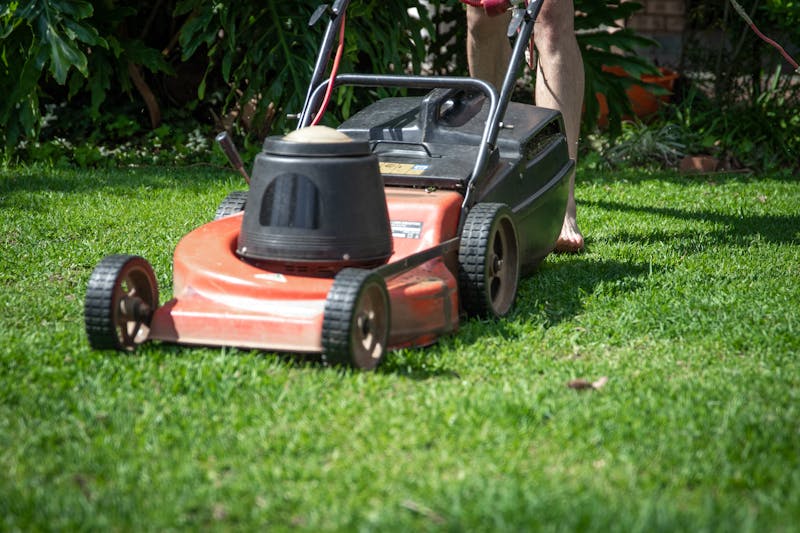
If your lawn mower only runs with the choke on after it has warmed up, the choke is compensating for a fuel-and-air problem. Possible directions include stale or incorrect fuel, restricted fuel delivery, deposits in a carburetor passage, unwanted air entering the intake, or a model-specific choke or control fault. The symptom does not prove that the carburetor is bad.
Brief choke use during a cold start can be normal on a manual-choke engine. Persistent dependence is different: the engine stalls, fades, or will not hold its normal RUN or FAST setting once the choke is released.
Choke-only mower diagnosis at a glance
| What happens | What it means for the next check | Model detail that matters |
|---|---|---|
| Starts cold on CHOKE, then runs smoothly in RUN or FAST | Usually normal operation | Follow the exact warm-up sequence; do not invent a time limit |
| Dies immediately whenever choke moves off | Normal fuel-air delivery cannot sustain running | Manual choke, automatic-return choke, and fixed-control engines use different hardware |
| Runs on half choke but surges | Choke dependence plus cyclical speed hunting | Use the separate mower surging diagnostic for the hunting pattern |
| Runs unloaded but fades when the blade or PTO engages | Load is exposing a delivery, mixture, or engine-condition problem | Push, riding, and zero-turn machines have different controls and fuel systems |
| Began after storage or old fuel | Fuel condition and deposits move higher on the list | Use the fuel grade, ethanol limit, and storage procedure in the engine manual |
| Began after filter, carburetor, or linkage work | Wrong part, sealing error, disturbed control, or incomplete setup is possible | Verify part numbers and procedures against both model records |
| Black smoke, strong fuel odor, wetness, or leaking fuel | Stop; this may be an overfueling or fire-risk branch, not a simple lean symptom | Use the mower smoke guide and do not restart for a leak |
| Automatic-choke mower behaves as if choke stays on or off | Control temperature, linkage, or component diagnosis is model-specific | Do not force or convert the mechanism; use the exact service information |
This matrix narrows the correct manual section. It does not identify a universal jet, mixture setting, gasket, fuel pump, or replacement carburetor.
Make the mower safe before checking it
Operate a gasoline mower outdoors only. Never run it in a garage, shed, trailer, or other enclosed or partly enclosed area; carbon monoxide can accumulate quickly.
Before an inspection, disengage the blade or PTO, park on a level surface, stop the engine, remove the key if fitted, wait for every moving part to stop, and let the engine and muffler cool. Follow the manuals’ exact accidental-start procedure, which may require securing the spark-plug lead or isolating a battery.
Keep cigarettes, flames, sparks, hot tools, and other ignition sources away from fuel and vapor. Do not remove a fuel cap from a hot engine, siphon by mouth, drain fuel onto the ground, reach near blades or belts, bypass an interlock, or run the mower with a guard or air cleaner removed. Stop for visible fuel, persistent fuel odor, flame, smoke outside the exhaust, damaged controls, severe vibration, or abnormal mechanical noise.
Identify both the mower and the engine
A mower brand is not enough. Record:
- The equipment model and serial number
- The engine model, type, code, or serial number
- Whether the choke is manual, automatic, or automatic-return
- Every control position used during the start and stall
- Fuel age, source, grade, ethanol content, and storage history
- Cold or warm engine, no load or cutting load, and time to failure
- Recent tipping, impact, refueling, filter service, or carburetor work
Retrieve both manuals. Honda’s lawn mower manual library separates equipment by series, while its GCV-family engine manual shows several manual and automatic choke control types. A current Toro model 21565 manual demonstrates why equipment instructions and serial scope matter even when engine information is supplied separately.
Check the evidence in a safe order
1. Confirm this is persistent choke dependence
Use the normal operator position and the starting sequence in the exact manual. A cold manual-choke engine may need CHOKE before transitioning to RUN or FAST as it warms. An automatic-choke model may give the operator no choke lever at all.
Do not hold or wire a choke in place. If a warm engine repeatedly dies as the specified control moves to its normal operating position, shut it down and record whether the stop is immediate, gradual, under load, or accompanied by surging, smoke, popping, or odor.
2. Audit the fuel history
Briggs & Stratton’s current small-engine troubleshooting guide identifies stale fuel, dirt, and debris as common running-problem causes and notes that untreated gasoline begins breaking down after about a month. That is a useful screening point, not permission to use one fuel rule for every engine.
Check the engine manual for the required grade, ethanol limit, storage treatment, and approved way to remove or replace fuel. Use only an approved, labeled container. The CPSC fuel-safety guide covers container, ventilation, spill, and ignition controls.
3. Inspect only accessible external items
With the engine cool and ignition disabled, look for wetness, cracked accessible fuel line, a loose connector, a damaged primer, disturbed linkage, a poorly seated air-filter cover, or evidence of recent incorrect assembly. Touch or remove only what the exact operator manual assigns to the owner.
A dirty air filter more often restricts air and can contribute to rich running or black smoke; it is not proof of the lean-running pattern commonly associated with choke dependence. Inspect, clean, or replace the exact filter only by its manual.
4. Treat the choke response as a clue, not a verdict
Closing a choke restricts intake air and enriches the mixture. Improvement with choke therefore supports an air-fuel direction, but several faults can create that response. Briggs & Stratton’s carburetor guidance also points to fuel condition, air-filter condition, connections, and deposits—and tells owners to consult the engine and equipment manuals or a dealer when unsure.
Do not copy a jet size, mixture-screw count, linkage bend, spring position, solvent, or compressed-air method from a different engine. Many modern carburetors have no owner mixture adjustment, and an incorrect procedure can damage components or defeat emissions and safety controls.
Push, riding, and automatic-choke differences
On a push mower, the engine may have a fixed governed speed, so advice about “idle adjustment” may not apply. On a riding mower or lawn tractor, fuel pumps, filters, shutoff devices, longer fuel lines, and operator controls vary widely. A zero-turn mower also adds PTO, brake, lap-bar, and seat interlocks; if the engine will not start at all, use the separate zero-turn no-start guide rather than treating it as a choke-only complaint.
An automatic-choke engine requires diagnosis of its exact temperature and linkage system. Do not add a manual control or force the plate. A manual-choke engine still needs its specified cable travel and linkage arrangement; visual movement does not prove the internal fuel path is clear.
When to use a qualified technician
Arrange model-specific service when the mower still needs choke after fresh specified fuel and the permitted external checks, or when diagnosis reaches the carburetor, intake seals, fuel pump, automatic-choke mechanism, ignition, compression, valves, or guarded moving parts.
Give the technician both model identities, manual revisions, fuel history, storage duration, symptom timing, recent work, and a list of checks already completed. For business equipment, tag the mower out and record the defect in a commercial mower maintenance log so another operator cannot return it to service.
Next step: build a model-specific service packet
Write down the exact point where the engine fails: cold or warm, CHOKE to RUN or FAST, immediate or gradual, unloaded or cutting, and with or without surge, smoke, odor, or leakage. Add photos of the model labels and any visible external condition after shutdown.
Then follow one matched manual path. Correct only an operator-serviceable item the manuals explicitly cover. If the mower still cannot run in its normal position, keep it out of service and send the packet to a qualified small-engine technician instead of mowing on partial choke or swapping parts.
Sources and image credit
- Briggs & Stratton: small-engine problem-solving tips
- Briggs & Stratton: carburetor inspection and cleaning guidance
- Honda: lawn mower owner’s manual library
- Honda: GCV-family engine owner’s manual
- Toro: model 21565 and 21565CA operator’s manual
- U.S. Consumer Product Safety Commission: gasoline and fuel-container safety
- Pexels image by Magda Ehlers
Keep related mower symptoms in the right diagnostic path
Use these guides when the primary symptom is speed cycling, smoke, a zero-turn no-start, or a fleet maintenance defect rather than sustained choke-only running.
- Lawn mower surging diagnostic
Diagnose repeated RPM rise and fall without treating governor movement as the root cause.
- Lawn mower smoke diagnostic
Separate white, blue, or black exhaust from an external fire or fluid hazard.
- Zero-turn mower no-start guide
Use interlock, battery, cranking, and fuel triage when the engine will not sustain a start at all.
- Commercial mower maintenance checklist
Tag out the mower and preserve the model, fuel, symptom, and service record for a technician.

TurfTech HQ Editorial Team
Independent trade-focused editorial team